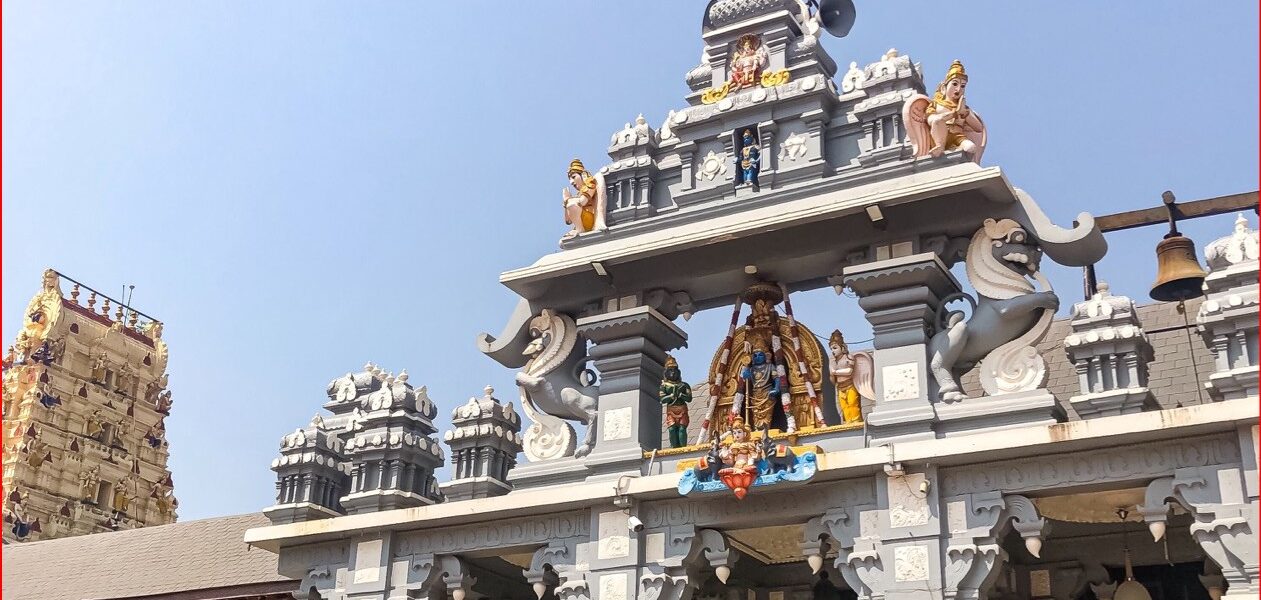

The Udupi Sri Krishna Matha in Karnataka is a 13th-century temple and monastery founded by Sri Madhvacharya, the proponent of the Dvaita (dualism) school of Vedanta. It is one of the most revered pilgrimage centres in South India, dedicated to Lord Krishna, and is famous for its unique traditions, rotating administration system (Paryaya), and cultural influence.
Historical Background
- Founder: Sri Madhvacharya (1238–1317 CE), a philosopher-saint who established the Dvaita philosophy, teaching that God and the soul are distinct but connected through devotion.
- Establishment: Around 1298 CE, Madhvacharya installed the idol of Lord Krishna, which he is believed to have discovered buried in a mound of gopichandan (sandal paste).
- Dvaita Tradition: The Matha became the central seat of Dvaita Vedanta, influencing theology, literature, and devotional practices across Karnataka.
Temple & Matha Structure
- Main Deity: Lord Krishna, worshipped in child form (Balakrishna).
- Architecture: Built in Kerala-style temple architecture, with a sanctum where devotees view Krishna through a small window called the Kanakana Kindi (legend says saint Kanakadasa first saw Krishna through this window).
- Surrounding Temples: Includes the ancient Anantheshwara Temple and Chandramouleshwara Temple, older than the Krishna shrine.
- Living Ashram: The Matha complex resembles a spiritual community, with daily rituals, study, and devotion.
Unique Traditions
- Paryaya System:
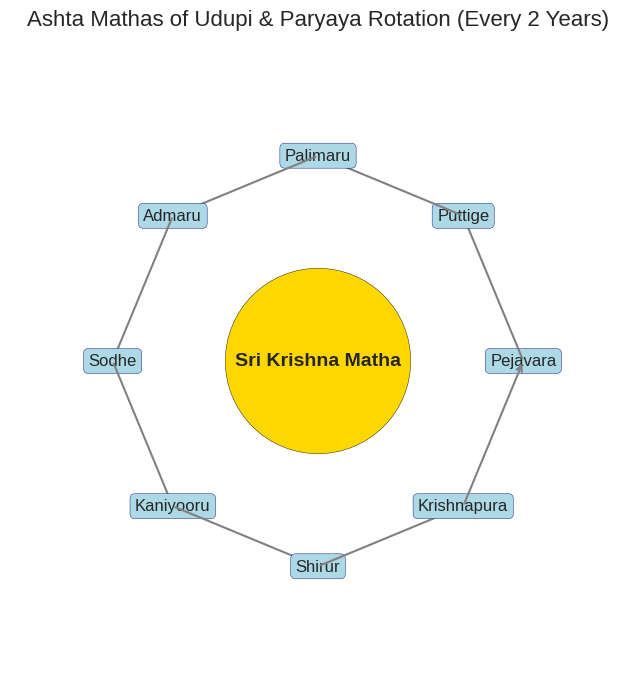
- Every two years, one of the eight Ashta Mathas (monasteries founded by Madhvacharya’s disciples) takes charge of temple administration.
- The eight Mathas are: Pejavara, Puttige, Palimaru, Admaru, Sodhe, Kaniyooru, Shirur, and Krishnapura.
- This rotation ensures continuity and shared responsibility among Madhva’s spiritual lineage.
- Sevas & Festivals:
- Daily offerings and elaborate rituals.
- Major celebrations include Krishna Janmashtami, Geeta Jayanthi, and the Paryaya festival.
- Currently, the Matha is hosting the Laksha Geeta Pathana (mass chanting of Bhagavad Gita verses by over one lakh devotees).
Cultural & Spiritual Significance
- Philosophy: A hub for Dvaita Vedanta studies, attracting scholars and devotees worldwide.
- Music & Literature: Inspired the Haridasa movement, producing devotional songs (bhajans) in Kannada.
- Pilgrimage Centre: Alongside Tirupati and Guruvayur, Udupi is one of the most important Krishna temples in India.
- Modern Relevance: Leaders and dignitaries, including Prime Minister Narendra Modi, have visited the Matha, highlighting its national importance.
Essence
The Udupi Sri Krishna Matha is not just a temple but a living spiritual institution that blends devotion, philosophy, and culture. Its rotating Paryaya system, Dvaita teachings, and unique Krishna worship traditions make it a cornerstone of Karnataka’s religious heritage.
How the Rotation Works
- Eight Mathas: Pejavara, Puttige, Palimaru, Admaru, Sodhe, Kaniyooru, Shirur, Krishnapura.
- Cycle Duration: Each Matha governs for 2 years, then passes responsibility to the next.
- Full Cycle: 16 years for all eight Mathas to complete one round.
- Symbolism: Ensures shared responsibility, continuity of tradition, and unity among Madhvacharya’s disciples.